
Ceramic-on-Ceramic Hip Resurfacing
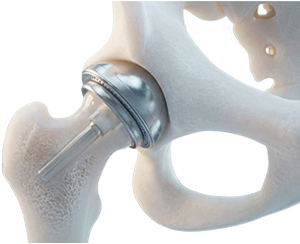
Bone-Preserving Hip Resurfacing for Selected Patients
Ceramic-on-ceramic hip resurfacing is a bone-preserving alternative to traditional total hip replacement for carefully selected patients. Rather than removing the entire femoral head, hip resurfacing reshapes the damaged joint surface and covers it with a prosthetic component, preserving more of the patient's natural bone.
Mr Patrick Carton performs ceramic-on-ceramic hip resurfacing and does not perform metal-on-metal hip resurfacing. Ceramic bearing surfaces are used to support smooth joint movement without the metal ion release associated with metal-on-metal articulations.
Hip resurfacing may be considered for active patients who want to maintain a high level of function, including a potential return to higher-impact activities where clinically appropriate. Whether resurfacing is suitable depends on factors including bone quality, hip anatomy, diagnosis, age, activity goals, and overall health.
What Is Ceramic-on-Ceramic Hip Resurfacing?
Ceramic-on-ceramic hip resurfacing is a type of hip replacement procedure designed to preserve more of the patient's natural femoral bone.
During traditional total hip replacement, the damaged femoral head is removed and replaced with a stemmed implant. In hip resurfacing, the femoral head is preserved, reshaped, and fitted with a resurfacing component. The socket is also prepared and fitted with a corresponding component.
The bearing surfaces in this procedure are ceramic rather than metal. This distinguishes ceramic-on-ceramic resurfacing from older metal-on-metal hip resurfacing designs.
Who May Be Suitable for Hip Resurfacing?
Ceramic-on-ceramic hip resurfacing may be considered when:
- Severe hip arthritis or joint damage is affecting quality of life
- Hip pain and stiffness are limiting walking, exercise, work, or daily activities
- Symptoms have not improved sufficiently with non-surgical treatments
- Bone quality and hip anatomy are appropriate for resurfacing
- The patient is seeking a bone-preserving reconstructive option
- The patient wishes to maintain an active lifestyle and understands the recovery process and associated precautions
Not everyone is suitable for hip resurfacing. Mr Carton will assess your hip and discuss whether ceramic-on-ceramic resurfacing, advanced total hip replacement, or another treatment approach is more appropriate.
What Symptoms May Lead to Hip Resurfacing Assessment?
Patients being assessed for hip resurfacing may experience:
- Persistent hip or groin pain
- Pain when walking, exercising, playing sport, or performing daily activities
- Hip stiffness
- Reduced range of movement
- Pain that affects sleep
- Difficulty maintaining normal levels of physical activity
- Progressive symptoms despite conservative treatment
How Is Hip Resurfacing Diagnosed and Planned?
Assessment typically involves a detailed review of your symptoms, medical history, activity requirements, and treatment goals.
Your assessment may include:
- Physical examination of the hip
- X-rays to assess the joint, bone shape, and severity of arthritis
- Additional imaging when required for surgical planning
- Assessment of bone quality and hip anatomy
- Discussion of your activity goals and expectations
This information helps Mr Carton determine whether hip resurfacing or another form of hip reconstruction is appropriate.
Hip Resurfacing vs Total Hip Replacement
The main difference between hip resurfacing and traditional total hip replacement is how the femoral head is treated.
Total hip replacement:
The damaged femoral head is removed and replaced with a stemmed implant. A separate component is placed inside the hip socket.
Hip resurfacing:
More of the natural femoral head is retained. The damaged surface is reshaped and covered with a resurfacing component, while the socket receives a matching component.
Hip resurfacing therefore preserves more of the patient's femoral bone. This may be an important consideration for selected active patients.
Ceramic-on-ceramic resurfacing also differs from metal-on-metal resurfacing because the bearing surfaces are ceramic rather than metal.
How Is Ceramic-on-Ceramic Hip Resurfacing Performed?
The procedure is performed under spinal or general anaesthesia. The exact surgical technique and implant selection are tailored to the individual patient.
In general, the procedure involves:
- Accessing the hip joint through an incision.
- Carefully positioning the femoral head to allow access to the joint.
- Preparing and reshaping the damaged surface of the femoral head.
- Fitting the femoral head with the ceramic resurfacing component.
- Preparing the acetabulum, or hip socket.
- Securing the corresponding ceramic-bearing socket component.
- Repositioning the resurfaced femoral head into the socket.
- Repairing the surrounding soft tissues and closing the incision.
Mr Carton will explain the specific implant system, surgical approach, and expected procedure as part of your consultation.
Potential Advantages of Ceramic-on-Ceramic Hip Resurfacing
For appropriately selected patients, potential advantages may include:
- Preservation of more of the natural femoral bone
- Ceramic bearing surfaces
- No metal-on-metal bearing articulation
- Avoidance of metal ion release associated with metal-on-metal resurfacing
- A potential option for active patients seeking to maintain higher levels of physical activity
- Preservation of bone that may be relevant if further surgery is required in the future
Outcomes vary between patients. Hip resurfacing is not suitable for everyone, and realistic expectations will be discussed based on your individual assessment.
Risks and Possible Complications
As with any surgical procedure, hip resurfacing has potential risks and complications. These may include:
- Infection
- Blood clots, including deep vein thrombosis or pulmonary embolism
- Femoral neck fracture, which may require conversion to total hip replacement
- Dislocation
- Nerve or blood vessel injury
- Ongoing pain or stiffness
- Component wear or loosening
- Leg-length difference
- Need for revision surgery
- Risks associated with anaesthesia
Ceramic-on-ceramic resurfacing does not have the metal ion-related concerns associated with metal-on-metal bearing surfaces. Procedure-specific risks will be discussed with you before surgery.
Recovery After Hip Resurfacing
Recovery varies depending on the individual, the procedure performed, and overall health.
Early recovery generally focuses on:
- Wound care
- Managing swelling and discomfort
- Safe mobility
- Gradual return to normal movement
- Physiotherapy and rehabilitation as advised
Patients typically progress gradually from walking and everyday activities towards higher-demand physical activity as healing allows.
Mr Carton's team will provide individualised rehabilitation guidance and advise you when it is appropriate to increase activity levels.
For appropriately selected active patients, the longer-term aim is to restore comfortable hip function and support a return to desired activities where clinically appropriate.
Is Ceramic-on-Ceramic Hip Resurfacing Right for Me?
The most appropriate treatment depends on your individual hip condition, bone quality, anatomy, age, activity goals, and overall health.
During a consultation, Mr Carton will review your symptoms and imaging and discuss whether you may be suitable for:
- Ceramic-on-ceramic hip resurfacing
- Advanced total hip replacement, such as uncemented ceramic-bearing total hip replacement
- Hip preservation surgery
- Another appropriate treatment pathway
A specialist assessment is required to determine the most suitable option.
Consult Mr Patrick Carton
Mr Patrick Carton is a Consultant Orthopaedic Hip Surgeon providing assessment and treatment for patients with hip conditions.
Mr Patrick Carton, MB, BCh, BAO, MD, FRCS(Tr&Orth), FFSEM, FWSSEM
Consultant Orthopaedic Hip Surgeon
The Hip Preservation Institute / UPMC Whitfield
Cork Road, Butlerstown North, Waterford
Appointments are available in Waterford and Cork.
Request an Appointment to discuss your hip symptoms, treatment options, and whether ceramic-on-ceramic hip resurfacing may be appropriate for you.
Frequently Asked Questions
Does Mr Carton Perform Metal-on-Metal Hip Resurfacing?
No. Mr Carton performs ceramic-on-ceramic hip resurfacing and does not perform metal-on-metal hip resurfacing.
Is Hip Resurfacing the Same as Total Hip Replacement?
No. Hip resurfacing preserves more of the femoral head by reshaping and covering it with a resurfacing component. Traditional total hip replacement generally involves removing the femoral head and replacing it with a stemmed implant.
Who Is a Typical Candidate for Hip Resurfacing?
Hip resurfacing may be considered for carefully selected younger or highly active patients with suitable bone quality and hip anatomy. However, suitability cannot be determined based on age or activity level alone and requires specialist assessment.
What Are the Bearing Surfaces Used in Ceramic-on-Ceramic Resurfacing?
The bearing surfaces are ceramic. This differs from metal-on-metal hip resurfacing, where both bearing surfaces are metal.
Can I Return to Sport After Hip Resurfacing?
Some appropriately selected patients may be able to return to higher-impact activities following recovery. The timing and level of activity will depend on healing, rehabilitation, individual circumstances, and Mr Carton's recommendations.
Does Hip Resurfacing Preserve More Bone Than Total Hip Replacement?
Generally, yes. Hip resurfacing preserves more of the femoral head and femoral bone than a conventional stemmed total hip replacement. Whether this advantage applies to you depends on your individual anatomy and suitability for resurfacing.